Great Design Shouldn't Cost a Fortune. Prestige Often Does.
Clients should pay for judgment, clarity, and a project that works—not layers of overhead or a trophy campaign. Great design can be ambitious, personal, and efficient when the studio is built around the client.
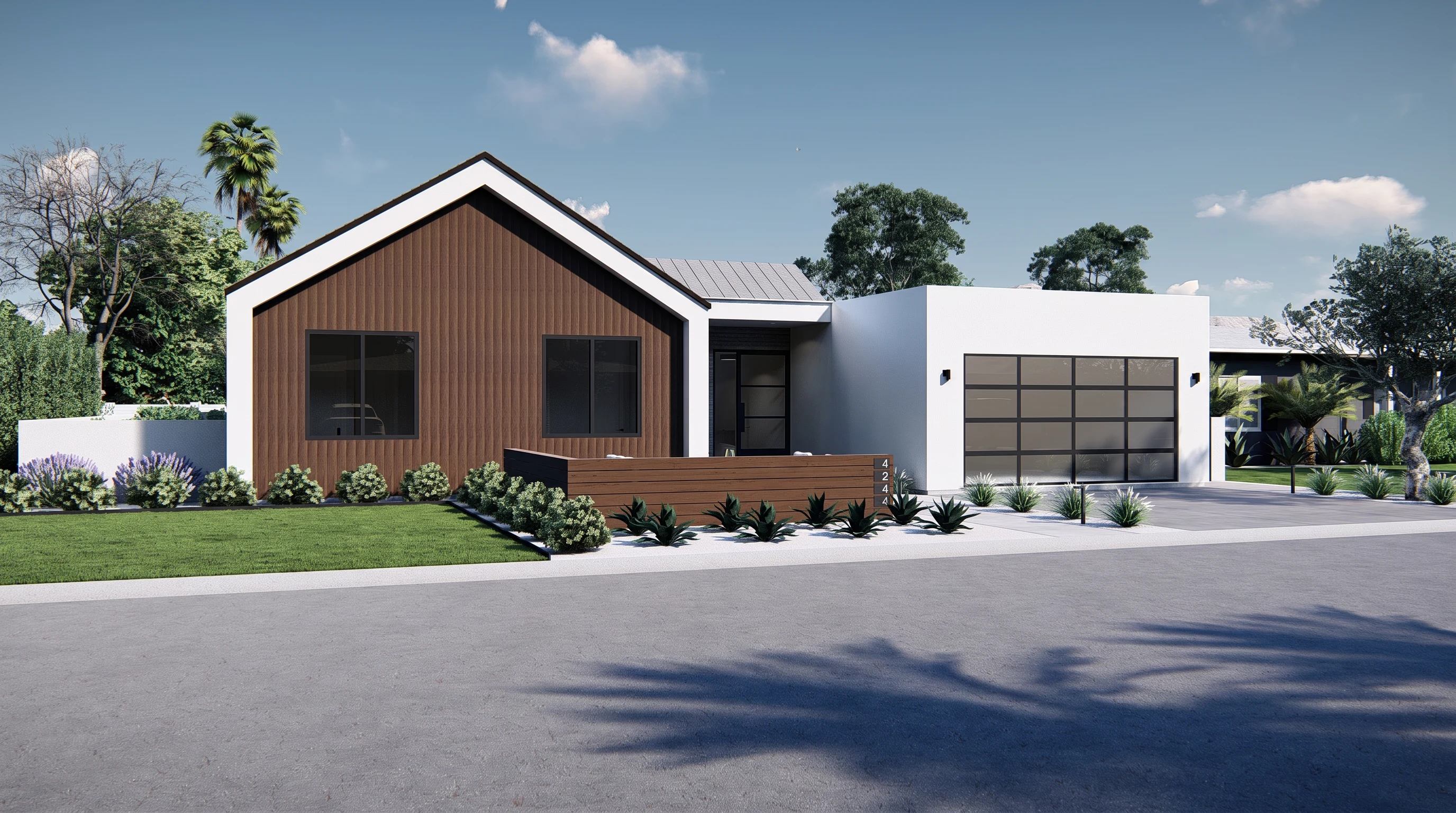
There is a version of the design industry that wants you to believe great work must be expensive because greatness itself is expensive. The office has to be impressive. The team has to be large. The proposal has to feel exclusive. The principal's name has to be recognizable. The award list has to be long. By the time the project reaches the client, an enormous amount of infrastructure has already been built around the appearance of excellence.
I believe something different: great design should not cost a fortune simply because the firm delivering it has expensive machinery around its brand. A client should pay for judgment, creativity, technical clarity, responsiveness, and a finished result that improves the way they live or operate. They should not have to finance layers of internal approval, prestige marketing, or a trophy campaign that has nothing to do with their project.
This is not an argument that design should be cheap. Cheap work can become extraordinarily expensive once construction begins. It is an argument that design should be efficient—and that the fee should be concentrated on the work the client can actually use.
An Award Is Recognition. It Is Not a Client Outcome.
There are legitimate design awards, thoughtful juries, and extraordinary award-winning projects. Peer recognition can matter. It can challenge the profession, elevate important ideas, and draw attention to work that deserves to be studied.
But an award does not automatically tell you who designed your kitchen. It does not tell you whether the principal attended your working sessions, whether your questions were answered quickly, whether the drawings coordinated with the renderings, whether your contractor understood the intent, or whether the final space reflects how you want to live.
It is also important to be honest about how the system works. Firms do not simply receive every award from a neutral observer who discovers the project. Some respected programs require firms to prepare an application and pay for access to consideration. The American Institute of Architects' 2027 Architecture Award, for example, lists a non-refundable fee of $450 for one project submitted to one project-based award program, plus $100 for additional submissions of the same project to other project-based programs.[1]
That is not paying to win. The AIA describes an expert jury, a uniform rubric, and substantive design criteria. But it is paying to enter—and the entry fee is only the visible cost. There can also be photography, application writing, staff time, graphics, travel, events, and promotion. A firm may decide that investment is worthwhile. Tristan Scott Design has made a different priority: put the energy into the client's project.
| What recognition may signal | What the client still needs to verify |
|---|---|
| A jury admired a completed project | Will the same people actually work on my project? |
| The firm presents work effectively | Will I see and understand decisions before construction? |
| The project achieved design distinction | Did it satisfy the owner's real priorities, budget, and daily needs? |
| The firm has industry visibility | How quickly can the decision-maker answer me? |
Prestige Has Overhead. Clients Should Ask What It Buys Them.
Large and award-winning firms can do excellent work. They can also carry offices, departments, management layers, marketing teams, business-development staff, and long chains of internal coordination. None of those things are inherently wrong, and this is not a claim that every large firm is inefficient. It is a prompt for clients to understand what their fee is funding—and whether that structure improves their project enough to justify its cost.
When a client meets a celebrated principal and then works primarily through a project manager, junior designer, visualization vendor, and documentation team, every transition consumes time. The client may be paying for the reputation at the top while living with the communication structure underneath.
A boutique practice is not an unusual or lesser professional model. AIA's 2024 Firm Survey summary says roughly 75% of the more than 19,000 architecture firms in the United States have fewer than ten employees.[2] Small studios are the profession's backbone. Their advantage is not pretending to be a large firm at a lower price. It is structuring the work so fewer dollars are lost between the client and the person making the decisions.
Efficiency Is Not Doing Less. It Is Removing Distance.
At Tristan Scott Design, efficiency starts with continuity. The same studio can measure an existing property, develop the floor plan, build the 3D model, design the architecture and interiors, create photorealistic renderings, and translate the approved direction into construction documents. The concept does not have to be re-explained every time the project changes hands.
That connected design process allows us to move quickly without asking clients to accept uncertainty. It also means visualization is not presentation theater at the end. It is a working tool used throughout the project to test scale, function, materials, sightlines, and decisions before those decisions become expensive.
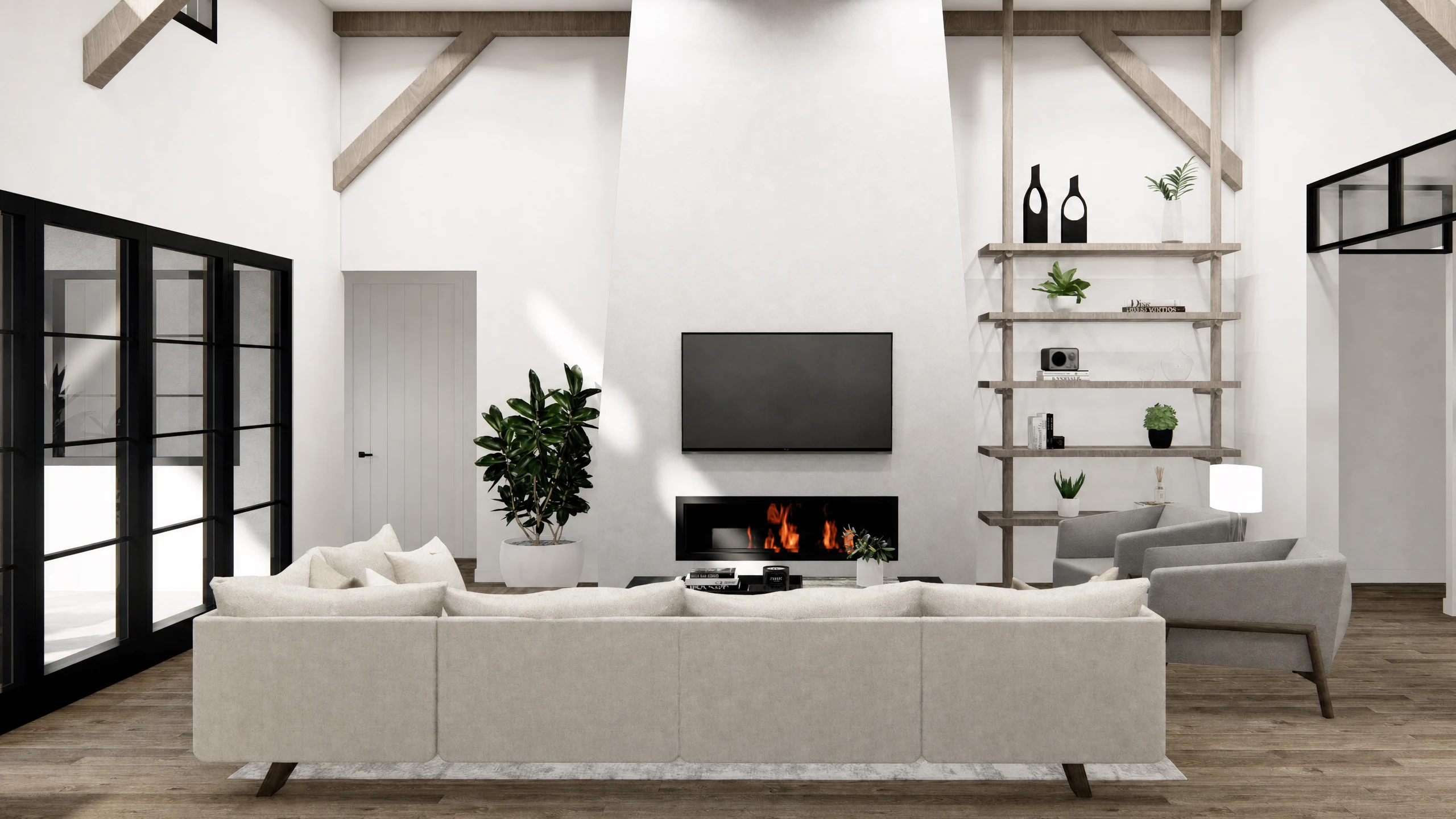
On full-service design projects, we can work with clients in real-time collaborative sessions through Zoom or Google Meet. We can study a kitchen, bathroom, bar, or primary suite together; ask the difficult functional questions; test options in the model; and make changes while the conversation is still happening. The client does not wait a week for a revised presentation only to discover that the first question was misunderstood.
That is what efficient design looks like. Not fewer ideas. Not lower standards. Less translation, less waiting, and less rework.
What Your Design Fee Should Be Buying
A strong design fee should purchase concentrated expertise. It should buy access to the person responsible for the ideas. It should buy drawings that communicate clearly, renderings that let you evaluate the outcome, and a process that discovers problems while they are still inexpensive to solve.
Judgment: Why is this the right decision for your site, budget, and life?
Access: Can you speak directly with the person making the decision?
Certainty: Can you see what you are approving before construction?
Coordination: Do the model, renderings, and documents describe the same project?
Accountability: Is one person clearly responsible for carrying the intent through?
Our design and visualization services are built around those outcomes. We are not trying to be the least expensive line on a spreadsheet. We are trying to make every design dollar work harder by combining services that are often fragmented and by resolving more decisions before construction.
Client Approval Matters More Than Jury Approval
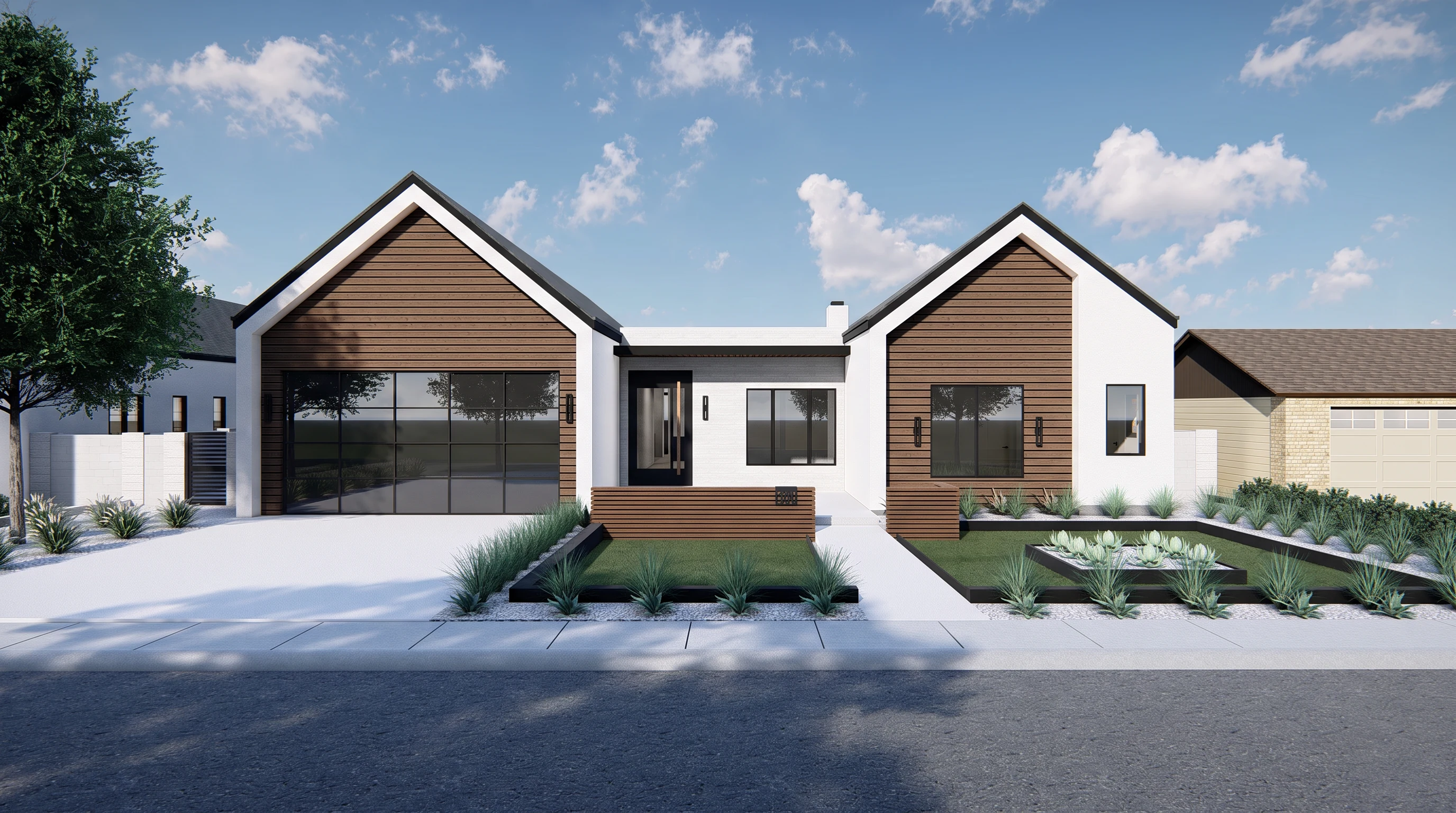
The paired visualization above was not created to impress an awards jury. It was created so a builder and investor could understand how two neighboring homes would read together before both were complete. That image had a job. It communicated context, reduced uncertainty, supported marketing, and helped align the people responsible for execution.
The same principle applies whether we are helping an owner understand a primary suite, giving trades a clear reference, preparing a property for presale, or delivering an accelerated package such as The 9-Day Kitchen. The design is successful when it solves the client's problem beautifully and clearly.
We do not design for the photograph, the algorithm, or the trophy shelf. We design for the person who has to live with the result.
The Bottom Line
Great design is valuable. It can improve daily life, protect a construction investment, strengthen a development, make a commercial space perform better, and turn an ordinary property into something people remember. That value deserves a professional fee.
But a higher fee is not automatically evidence of better design, and a longer award list is not proof of a better client experience. The strongest comparison is not whose logo carries more prestige. It is who will do the work, how directly you can participate, what you will receive, how clearly you will understand it, and whether the process is built around your outcome.
At Tristan Scott Design, we care deeply about great design. We also care whether the design is yours. We care whether you can see it, question it, change it, approve it, afford it, and build it with confidence. That is the recognition that matters.
Want ambitious design without paying for someone else's prestige machine? Book a free consultation with Tristan Scott Design. We work with homeowners, investors, developers, builders, and businesses throughout Phoenix, Scottsdale, Paradise Valley, and nationwide.