The Real Cost of Hiring an “Industry Leader”: When Marketing Outgrows the Work
Visibility can make a firm look indispensable. It cannot prove who will design your home, how much attention your project will receive, or whether every recommendation is truly independent.
“Industry leader” is one of the most expensive phrases in design.
It can mean experience, judgment, influence, and an exceptional body of work. It can also mean a highly visible principal, a polished social-media operation, a familiar circle of collaborators, and a premium fee built around the brand's perceived importance. Those are not the same thing.
Clients rarely hire a residential design team because they want to participate in the design industry's popularity contest. They hire one because they are about to make consequential decisions with real money, real construction risk, and a home they may live in for decades. They need attention. They need candor. They need someone to understand the way they live and carry that understanding into hundreds of connected decisions.
The real cost of hiring an industry leader is not always the fee. It is the possibility that you are paying for public visibility while your project receives private delegation.
Marketing Is Part of Business. It Should Not Become the Product.
There is nothing wrong with a design firm using Instagram. We use visual media too. It helps clients understand our work, makes an intangible service easier to evaluate, and gives talented teams a place to communicate what they believe.
The problem begins when the content calendar starts influencing the project calendar. A room is no longer judged only by whether it fits the client; it is judged by whether it creates a reveal. A material is no longer selected only for durability, budget, and context; it is selected because it photographs well. The principal's attention is pulled toward styling, shooting, captions, partnerships, events, interviews, and the next public moment—while the less visible work of documentation, coordination, revision, and client communication moves elsewhere.
That distinction is explored in “Your Designer Is Building Their Instagram. Not Your Home.” The deeper issue is not taste. It is the allocation of attention. Every studio has finite time. Clients should know where that time goes.
| Public signal | Client proof |
|---|---|
| A large following | The person you hired attends your working meetings and knows your project |
| Frequent project reveals | Decisions are resolved before construction and documented clearly |
| Famous collaborators | Relationships, markups, compensation, and alternatives are explained transparently |
| A recognizable principal | You know who is actually drawing, modeling, reviewing, and answering for the work |
The Industry-Leader Premium Should Buy More Than Proximity to a Name
If a firm charges a premium because of its principal's experience, then access to that experience should be visible in the process. Who leads discovery? Who studies the floor plan? Who works through the details? Who reviews the model? Who answers when a contractor uncovers a conflict? Who notices that a beautiful move creates a daily frustration?
If the answer changes at every stage, the client may be buying proximity to expertise rather than the expertise itself. That does not automatically make the work bad. Large teams can produce exceptional projects. But clients deserve to understand the operating model before signing—not after the celebrated principal disappears and the project moves through a chain of unfamiliar names.
We addressed that handoff problem directly in “The Dirty Secret of Big-Name Design Firms.” The useful question is simple: Which person is accountable for maintaining the original intent when decisions become difficult?
A Close Industry Circle Is Not Proof of Collusion
Phoenix and Scottsdale have a sophisticated design and construction community. The same designers, builders, vendors, photographers, brokers, publications, showrooms, and consultants will naturally work together more than once. Strong repeat relationships can improve coordination and produce better projects.
But repetition can also look like independence when it is actually an ecosystem. One professional recommends another, that collaborator supplies the project, the project becomes content, the content benefits everyone involved, and the same group appears together again. From outside the circle, a client may have no way to know whether the recommendation was based solely on fit, shaped by habit, or connected to compensation or another material relationship.
That is not evidence of collusion. Collusion is a serious allegation that requires facts, not pattern recognition or frustration. The responsible issue is transparency: what relationships exist, what value changes hands, what alternatives were considered, and whose interest controls the recommendation.
Professional ethics recognize that distinction. The AIA's current Code of Ethics says members should avoid conflicts of interest and fully disclose unavoidable conflicts as they arise.[1] The ASID Code says members should disclose all compensation they receive in connection with a client project, avoid undisclosed compensation from people or firms involved with it, communicate candidly, and act with fiscal responsibility in the client's best interest.[2]
Social-media relationships deserve clarity too. The Federal Trade Commission says endorsements should make material connections obvious, including personal, family, employment, or financial relationships and free or discounted products or services. The guidance applies when a post functions as an endorsement; it does not mean every tag or collaboration is improper. It means the audience should receive enough information to weigh the recommendation honestly.[3]
Ask Better Questions Before You Hire the Brand
The goal is not to interrogate a designer about every professional friendship. It is to understand how your project will be staffed, how recommendations are made, and whether incentives are aligned with your outcome.
Principal attention: After the sales meeting, when will I work directly with the person whose name and portfolio brought me here?
Authorship: Who will develop the plan, design the rooms, build the model, prepare the drawings, and review revisions?
Recommendations: Are any preferred vendors, trades, builders, or products connected to referral fees, rebates, commissions, gifts, discounts, or ongoing promotional relationships?
Choice: May I consider qualified alternatives, and will the team explain why one recommendation is better for my project?
Communication: How quickly will questions be answered, and who owns the answer when disciplines conflict?
Content: Is photographing or publishing my home optional, and can I decline without changing the service I receive?
A confident firm should welcome these questions. Transparent relationships are not a weakness. They give clients the context required to make informed decisions.
The Work Should Still Matter When No One Is Posting It

A home has to work from angles that will never be photographed. The circulation has to make sense when no one is filming. The storage has to work after the styling team leaves. The lighting has to support ordinary evenings. The exterior, interior, landscape, pool, structure, and construction documents have to describe one coherent outcome.
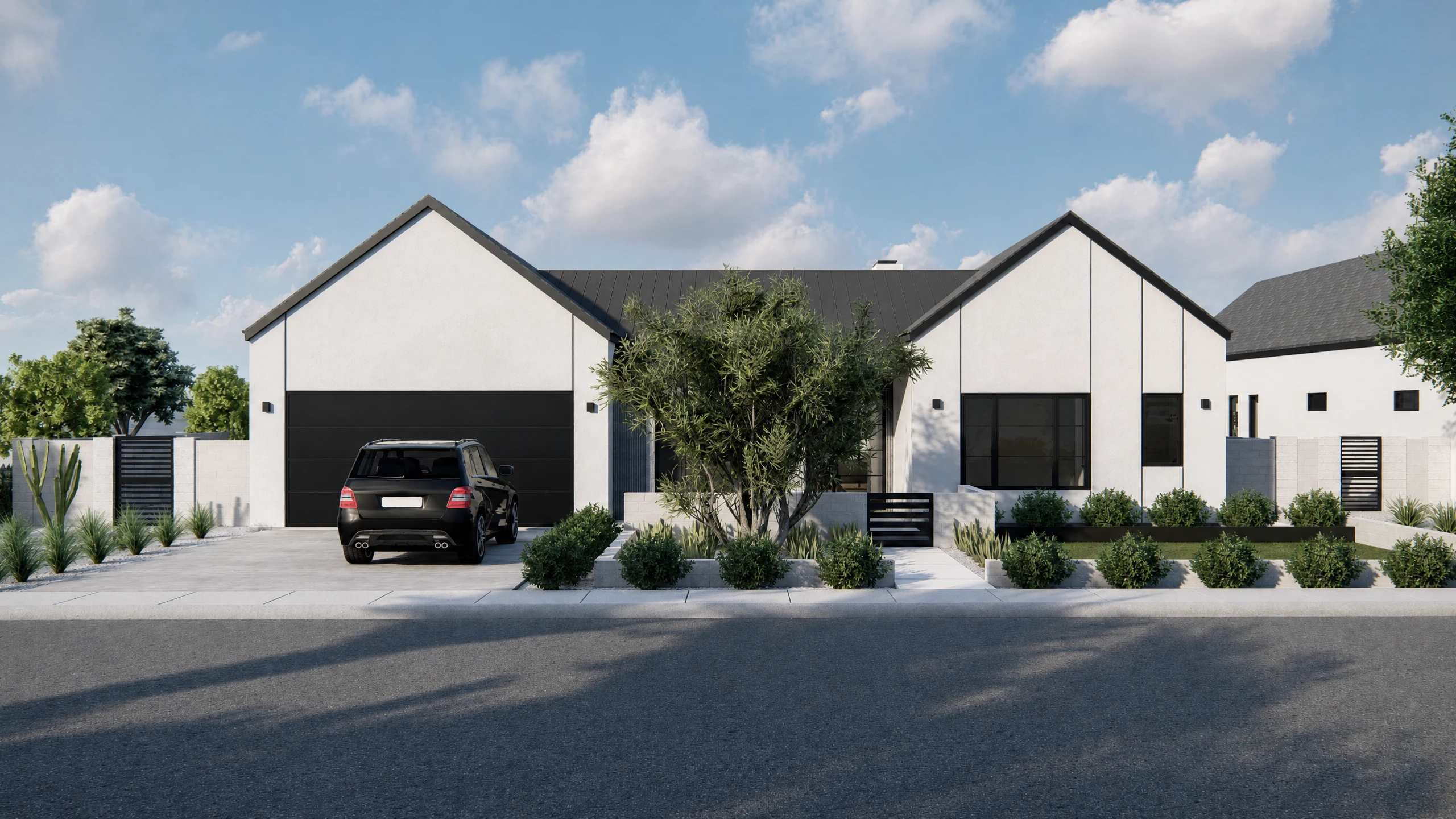
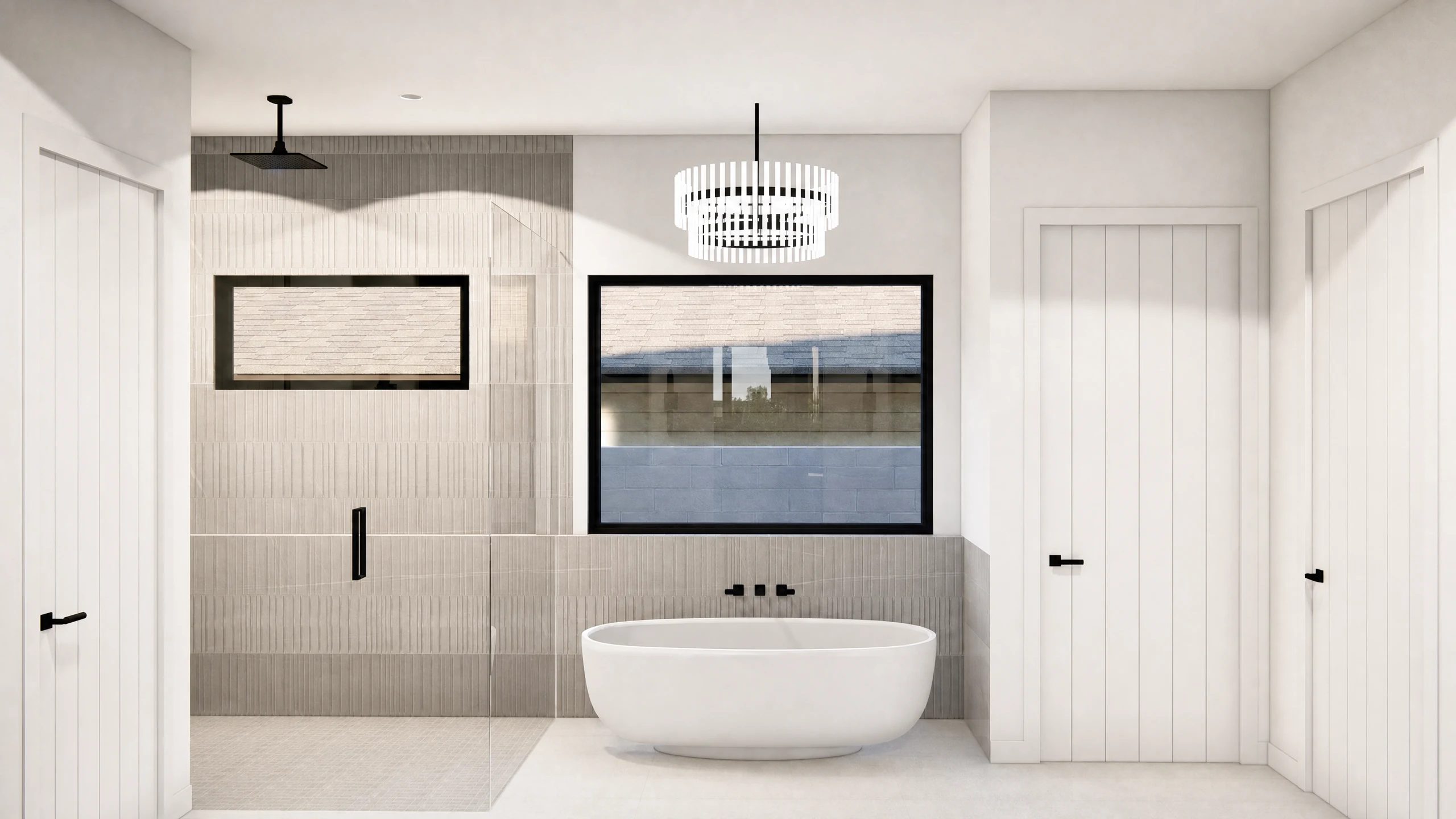
That is why our process is built around direct participation and visual proof. We use real-time collaborative design sessions when appropriate, develop coordinated 3D models, and create photorealistic renderings as decision-making tools—not merely marketing images. Projects such as 5151 E Earll, 5141 E Earll, and 4244 E Catalina used visualization to clarify the intended result for builders, trades, investors, and marketing before construction was complete.
Our work still appears online. The difference is sequence: solve the project first, document the value second.
The Bottom Line
An industry leader should be able to offer more than recognition. The premium should buy judgment, access, accountability, transparency, and a process strong enough to protect the client's priorities when no one is watching.
Follower counts, familiar collaborations, magazine coverage, and professional awards can all be meaningful signals. None of them answers the question a client ultimately has to live with: Did this team give my home the same energy it gave its own image?
Do not hire the most visible name in the room. Hire the team that makes your project impossible to overlook.
Want direct attention, transparent recommendations, and visual certainty before construction? Explore our design and visualization services or book a free consultation with Tristan Scott Design.